
AI's Design Gap
Let's move past a Blackberry
The Blackberry Pearl was released to considerable fanfare in 2006.
It had email. It had a web browser. It could stream music. It had a great little cursor—the “Pearl”—with satisfying haptics. People were genuinely excited about it.
Then the iPhone came out, and now no one has a Blackberry.
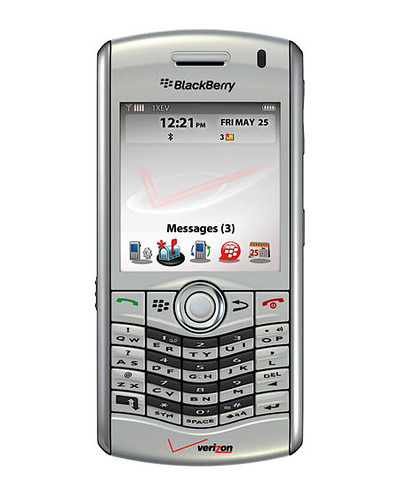
From a pure capability standpoint, the Pearl held its own.
Both devices did the same things. The iPhone was just easier at all of them. Simple enough your grandmother could use it. The interface disappeared, and suddenly everyone had a smartphone.
AI is still waiting for its iPhone moment.
As I write this today, the models have gotten quite good. They hallucinate less, stay on task longer, and are overall just more useful.
Right now, using AI feels like using a Blackberry. It works—power users love it—but it requires learning a new grammar. You need to know how to prompt. You need to context-switch into a chat window and then switch back to deal with the output.
The iPhone didn’t add capabilities. It removed friction. Pinch to zoom. Swipe to scroll.
You didn’t learn the iPhone; you just used it.
What’s the AI equivalent? Probably something like: the AI notices you’re struggling with an email, offers three drafts, you tap one, done. No context-switching. No prompt engineering. No copy-paste. The interaction feels as obvious as pinch-to-zoom.
The labs building the most capable models are unlikely to build this.
They’re locked in a capability arms race. Every dollar and researcher focused on the next benchmark. That’s where the competition is, where the funding flows. It’s Blackberry in 2007 adding a better keyboard.
Apple won because they understood the interface was the product. They weren’t competing on specs. They were competing on feel.
Current AI products want you to notice the AI. That’s the selling point. Apple didn’t care if you thought about the operating system. They wanted it to disappear.
The iPhone moment happens when someone decides the AI should disappear.
Smartphones existed for nearly a decade before the iPhone. The gap between “power users love it” and “everyone uses this constantly” is where AI sits now. The technology was never the problem.
We’re waiting for the interface to disappear.
Originally published on Griff’s Substack on 30 January 2026.